
Blog
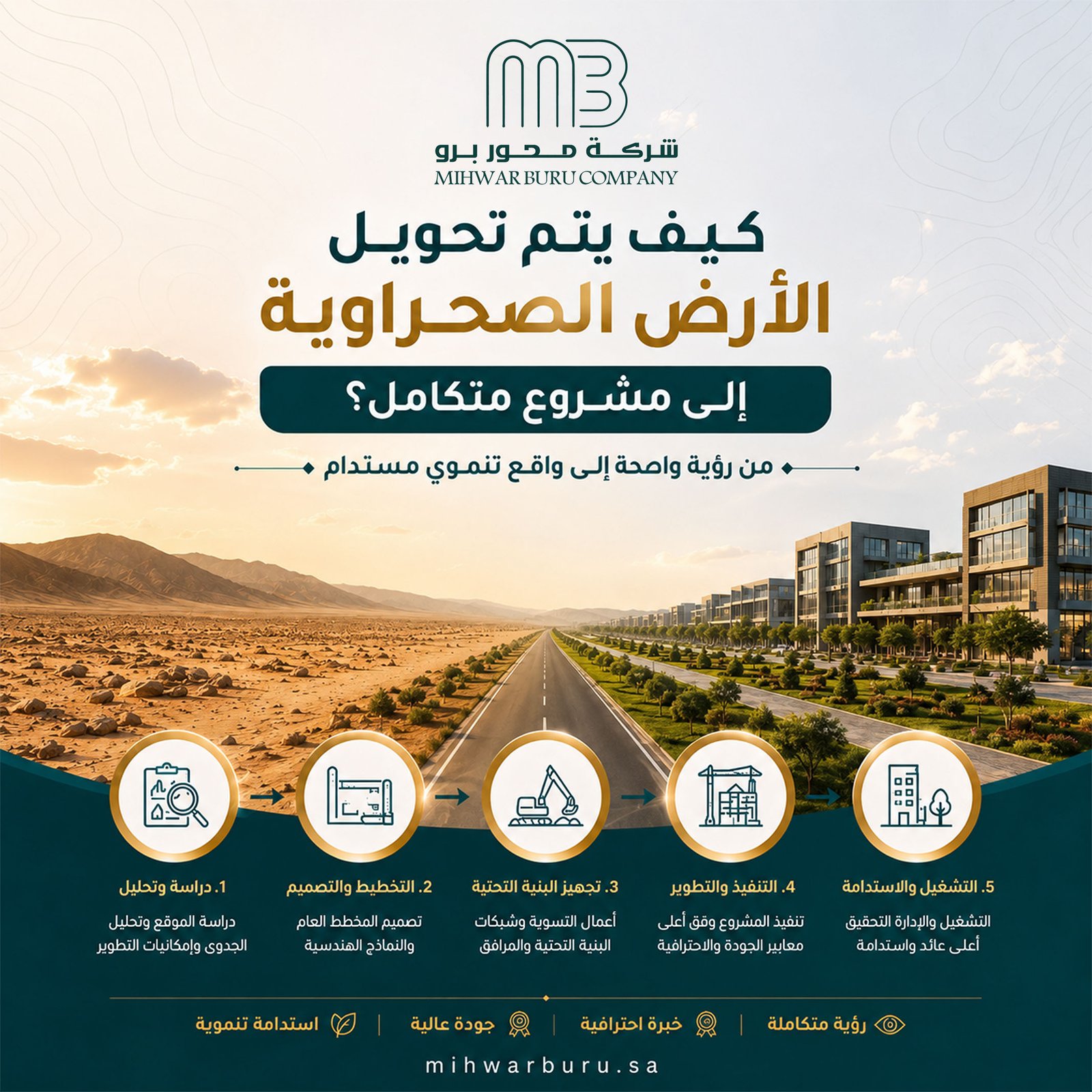
How Is Desert Land Transformed into a Fully Integrated Development Project?
Many major projects in Saudi Arabia begin on completely undeveloped desert land with no existing infrastructure or facilities. However, through meticulous engineering planning, modern equipment, and specialized expertise, these areas can be transformed into fully integrated residential, commercial, or entertainment developments. This process involves several key stages that ensure site readiness, high-quality execution, and the project’s long-term sustainability
Site Assessment and Engineering Survey
Site assessment is the first step in any successful project. It involves conducting topographic surveys, analyzing soil conditions, determining site elevations, and identifying natural obstacles. These studies help develop an accurate execution plan while reducing potential risks and future costs
Site Clearing and Preparation Work
Once the preliminary studies are completed, the site preparation phase begins by removing debris, rocks, and other obstacles from the project area. The project boundaries are then established, and temporary access roads and entrances are prepared to facilitate the movement of equipment, machinery, and construction personnel throughout the execution phase
Excavation , Cutting , and Filling Works
Excavation, cutting, and filling works are among the most critical stages in transforming desert land into a fully integrated development project. During this phase, the required excavations for utilities and infrastructure are carried out, followed by cut-and-fill operations to level the site and achieve the approved design elevations. The quality of this stage depends on the use of modern construction equipment and conducting compaction tests in accordance with engineering specifications to ensure a stable and durable foundation
Infrastructure Construction
Once the site has been fully prepared, the infrastructure construction phase begins, which includes
- Water supply networks
- Sanitary sewer networks
- Stormwater drainage networks
- Electrical power networks
- Telecommunication and fiber optic networks.
This phase forms the foundation of any modern development project and plays a vital role in ensuring the efficiency, reliability, and long-term performance of future infrastructure and utility services
Construction of Roads and Walkways
Internal roads, sidewalks, and pedestrian walkways are constructed in accordance with precise engineering standards to ensure safe traffic flow and easy access throughout the project. This phase includes the construction of subgrade and base layers, asphalt paving, as well as the installation of curbs and interlocking paving (interlock), depending on the project's requirements.
Landscaping and Planting Works
Landscaping transforms a construction site into an attractive and fully integrated environment. This stage includes preparing the planting soil, installing irrigation systems, and planting trees, shrubs, and green spaces in accordance with the project's overall landscape design
Construction of Buildings and Structure
Once the infrastructure works are completed, construction of the main buildings and facilities begins in accordance with the approved engineering designs. Throughout this phase, strict adherence to quality standards and safety regulations is maintained to ensure efficient execution, structural integrity, and long-term project sustainability
Testing and Project Handover
Before the final handover, comprehensive quality inspections and tests are conducted on all completed works to ensure full compliance with the required technical specifications. In addition, all utility networks, roads, and infrastructure facilities are thoroughly inspected to verify their operational readiness and ensure they are prepared for safe and efficient service
conclution
Transforming desert land into a fully integrated development is far more than a construction process—it is a comprehensive sequence of engineering activities that begins with planning and site investigations and culminates in the creation of a fully functional environment that serves individuals and communities. The success of this transformation depends on technical expertise, high-quality execution, and the use of advanced equipment and modern technologies throughout every stage of the project